PT-141 (bremelanotide): complete guide, mechanism, studies, side effects, status
PT-141, or bremelanotide, is a cyclic heptapeptide from the melanocortin family, closely related to Melanotan II and differing from it only at the C-terminus. As an agonist of the MC3R and MC4R receptors expressed in the brain, it acts on sexual desire through a central pathway, not through blood flow as sildenafil does. Developed by Palatin Technologies, it was approved by the FDA on 21 June 2019 as Vyleesi for hypoactive sexual desire disorder in premenopausal women.
This guide gathers the published data on PT-141: structure, mechanism, pharmacokinetics, trials in women (including the RECONNECT phase III programme) and in men, the US label, the abandonment of the nasal form, differences from Melanotan II, doses studied, reconstitution and regulatory status. The products mentioned are intended exclusively for in vitro and in vivo research (RUO), not for human use. To place the molecule within its family, see also our guide to melanocortins in research.

Molecular identity and pharmacochemistry
Bremelanotide is a synthetic analogue of alpha-melanocyte-stimulating hormone (α-MSH). Its sequence is Ac-Nle-cyclo[Asp-His-D-Phe-Arg-Trp-Lys]-OH: seven residues, N-terminal acetylation and a lactam bridge between aspartate and lysine, as in Melanotan II (MT-II). The only difference lies at the C-terminus. MT-II carries an amide (-NH2), bremelanotide a free carboxylic acid (-OH). It is often described as the deamidated metabolite of MT-II.
| Parameter | Value |
|---|---|
| Names | Bremelanotide, PT-141 |
| Brand name (United States) | Vyleesi, 1.75 mg autoinjector |
| Molecular formula | C50H68N14O10 |
| Molecular weight | 1,025.2 g/mol (free base; exact mass 1,024.52 Da) |
| CAS number | 189691-06-3 |
| Class | Melanocortin receptor agonist |
It inherits the design choices of MT-II, born at the University of Arizona in the late 1980s: norleucine at position 4 instead of oxidation-prone methionine, D-phenylalanine stabilising the His-Phe-Arg-Trp turn that carries the activity, and lactam cyclisation that protects against proteases. The history of this chemistry is covered in our complete Melanotan 2 guide.
Where PT-141 comes from
In the mid-1990s, the first MT-II trials in Tucson, designed to pigment the skin without sun exposure, revealed spontaneous erections in male volunteers. The trials by Wessells et al. (1998 and 2000) confirmed this effect. Palatin Technologies took up the lead with a sister molecule, PT-141.
One of the first published overviews of the programme is Molinoff et al. (Annals of the New York Academy of Sciences, 2003). In rats and non-human primates, PT-141 induced erections. Given systemically to rats, it activated hypothalamic neurons (increased c-Fos immunoreactivity), in the same region that viral tracing links to erectile tissue. In men, erectile activity rose quickly, and with dose.
Mechanism of action: a central pathway
Melanocortins act on five Gs-coupled receptors (MC1R to MC5R). Bremelanotide is a non-selective agonist. According to its US label, binding to MC1R (melanocytes, pigmentation) and MC4R (central nervous system) is most relevant at therapeutic doses. The same label states that the mechanism by which it improves sexual desire in women is unknown.
Animal data nonetheless sketch an explanation. Pfaus et al. (PNAS, 2004) showed that PT-141 selectively increased solicitation behaviours in female rats, the "appetitive" component of sexual behaviour, without changing lordosis or general motor activity. The review by Pfaus, Giuliano and Gelez (Journal of Sexual Medicine, 2007) adds that the effect is obtained subcutaneously, but also by direct infusion into the cerebral ventricles or the medial preoptic area (mPOA) of the hypothalamus. It is not obtained by infusion into the ventromedial hypothalamus. The hypothesis put forward by Pfaus et al. (2022) is activation of presynaptic MC4R in the mPOA, which would increase release of dopamine, an excitatory neurotransmitter for desire.
How it differs from sildenafil
Sildenafil and the other phosphodiesterase type 5 (PDE5) inhibitors act peripherally, on vascular smooth muscle. They prolong the effect of nitric oxide and cyclic GMP in the corpora cavernosa. They facilitate the vascular response to stimulation but do not act on desire itself. Bremelanotide acts upstream, in the brain. Two observations illustrate this:
- in the study by Rosen et al. (2004), it produced significant erectile responses in men with an inadequate response to Viagra 100 mg;
- in the study by Diamond et al. (2006) in 18 women, it increased reported desire, but vaginal vasocongestion measured during an erotic video did not change versus placebo.
The two classes do not target the same stage of the sexual response.
Pharmacokinetics
The Vyleesi label gives the parameters of the 1.75 mg subcutaneous form:
| Parameter | Value (FDA label) |
|---|---|
| Subcutaneous bioavailability | About 100% |
| Time to peak (Tmax) | About 1 hour (0.5 to 1 h) |
| Peak plasma level (Cmax) | 72.8 ng/mL |
| Terminal half-life | About 2.7 hours (1.9 to 4.0 h) |
| Plasma protein binding | 21% |
| Metabolism | Hydrolysis of the amide bonds of the cyclic peptide |
| Excretion (radiolabelled dose) | 64.8% in urine, 22.8% in faeces |
Exposure increases with renal or hepatic impairment (area under the curve multiplied by 1.2 to 2). Bremelanotide may slow gastric emptying and reduce the absorption of oral drugs. The label highlights a marked drop in exposure to oral naltrexone and advises against the combination.
By the nasal route, Diamond et al. (2004) measured in healthy men a median Tmax of 0.5 hour and a half-life of 1.85 to 2.09 hours.
Studies in women
Nasal phase 2 (Diamond et al., 2006)
In this double-blind crossover trial (Journal of Sexual Medicine), 18 premenopausal women with sexual arousal disorder received 20 mg intranasally and a placebo. More women reported moderate or high desire after bremelanotide (p = 0.0114), with no significant change in vaginal vasocongestion.
Subcutaneous phase 2b (Clayton et al., 2016)
This dose-finding trial (NCT01382719), published in Women's Health, compared placebo with three subcutaneous doses (0.75, 1.25 and 1.75 mg), self-administered as needed for 12 weeks. The efficacy analysis covers 327 premenopausal women. For the pooled 1.25 and 1.75 mg doses versus placebo:
- satisfying sexual events: +0.7 versus +0.2 per month (p = 0.0180);
- FSFI (Female Sexual Function Index) total score: +3.6 versus +1.9 (p = 0.0017);
- distress (FSDS-DAO total): -11.1 versus -6.8 (p = 0.0014).
Reported adverse events were nausea, flushing and headache. The 1.75 mg dose was selected for phase III.
RECONNECT: two phase III trials (Kingsberg et al., 2019)
The identical studies 301 (NCT02333071) and 302 (NCT02338960) ran from January 2015 to August 2016 and were published in Obstetrics & Gynecology. Protocol: 1.75 mg subcutaneously, as needed, versus placebo, for 24 weeks, in premenopausal women with acquired, generalised hypoactive sexual desire disorder (HSDD).
- Enrolment: 1,267 women randomised, of whom 1,247 in the safety population and 1,202 in the efficacy analysis. Mean age 39; 85.6% white, 96.6% enrolled in the United States.
- Desire (FSFI desire domain): difference versus placebo of +0.30 (study 301) and +0.42 (study 302), p < 0.001 in both.
- Distress about low desire (FSDS-DAO item 13): difference of -0.37 (p < 0.001) and -0.29 (p = 0.005).
- Satisfying sexual events: no significant difference versus placebo according to the FDA label. This was a secondary endpoint.
To gauge the size of the effect, the responder analysis published by the FDA at approval offers a benchmark. About 25% of patients on bremelanotide gained at least 1.2 points on the desire score, versus 17% on placebo. Distress fell by at least 1 point in 35% of them, versus 31% on placebo. The effect is statistically clear, but modest in absolute terms and limited to part of the patients.
Early discontinuation was common: 40% versus 13% (study 301), 39% versus 25% (study 302). The 52-week open-label extension (Simon et al., 2019) enrolled 684 women, 272 of whom completed it, with no new safety signal.
Studies in men
PT-141 was first studied in erectile dysfunction. Intranasally, Diamond et al. (2004) obtained a significant erectile response above 7 mg, with the first erection at about 30 minutes. Subcutaneously, Rosen et al. (2004) saw a significant response from 1 mg in healthy men, then at 4 and 6 mg in patients with an inadequate response to Viagra 100 mg. In 19 patients, Diamond et al. (Urology, 2005) combined 7.5 mg intranasally with 25 mg sildenafil: the response exceeded that of sildenafil alone. Finally, Safarinejad and Hosseini (Journal of Urology, 2008) randomised 342 sildenafil non-responders (10 mg intranasally versus placebo). A positive clinical result was seen in 33.5% of them, versus 8.5% on placebo (p = 0.03).
Two caveats apply. First, the Safarinejad and Hosseini trial, the largest of the series, has been subject since 2023 to an expression of concern issued by the Journal of Urology. The journal is flagging doubts about the paper, which readers should take into account. Second, none of these studies led to approval: development in men stopped with the nasal form. In August 2023, Palatin announced a phase 2 programme combining bremelanotide with a PDE5 inhibitor in a single injection, for men who do not respond to PDE5 inhibitors alone.
Why the nasal form was abandoned
The first PT-141 was a nasal spray, tested in men and women. Development of this form was halted around 2008, when the FDA raised concerns about blood pressure increases seen in some participants. Palatin later attributed these increases, along with digestive effects, to highly variable nasal absorption: some subjects received far higher exposure than intended. The subcutaneous route, which gives a tighter link between dose and exposure, was chosen for the rest of the programme. Trials in women resumed in this form, up to RECONNECT.
Vyleesi FDA label: key points
- Indication: acquired, generalised hypoactive sexual desire disorder in premenopausal women, not due to a medical, psychiatric, relationship or drug-related cause.
- Approved dosing: 1.75 mg subcutaneously (abdomen or thigh), as needed, at least 45 minutes before anticipated sexual activity. No more than one dose per 24 hours; more than 8 doses per month is not recommended. Discontinue after 8 weeks if there is no improvement.
- Contraindications: uncontrolled hypertension and known cardiovascular disease.
- Blood pressure: transient rise, at most 6 mmHg systolic and 3 mmHg diastolic, peaking 2 to 4 hours after dosing. Heart rate decreases by up to 5 beats per minute. Values usually return to baseline within 12 hours.
- Focal hyperpigmentation (face, gums, breasts): about 1% in controlled trials. In a separate study, 38% of subjects developed it after 8 daily doses, and resolution was not confirmed in all. Risk is higher in darker skin.
- Storage: at or below 25 °C, do not freeze, protect from light.
Most common adverse reactions in the trials, bremelanotide versus placebo:
| Adverse reaction | Bremelanotide | Placebo |
|---|---|---|
| Nausea | 40.0% | 1.3% |
| Flushing | 20.3% | 0.3% |
| Injection site reactions | 13.2% | 8.4% |
| Headache | 11.3% | 1.9% |
| Vomiting | 4.8% | 0.2% |
Nausea was most frequent after the first dose (21%) and fell to about 3% with later doses. 13% of patients needed an antiemetic and 8% stopped treatment because of it. Pretreatment with ondansetron did not reduce nausea.
PT-141 versus Melanotan II
| Melanotan II (MT-II) | PT-141 (bremelanotide) | |
|---|---|---|
| C-terminus | Amide (-NH2) | Free acid (-OH) |
| Formula | C50H69N15O9, 1,024.2 g/mol | C50H68N14O10, 1,025.2 g/mol |
| Development goal | Sunless pigmentation | Desire and erectile disorders |
| Human data | Small trials in the 1990s (a few dozen subjects) | Phase 2 and phase III (over 1,200 women in RECONNECT) |
| Approved drug | None | Vyleesi, United States (2019) |
| Pigmentation | Intended effect | Adverse effect listed on the label |
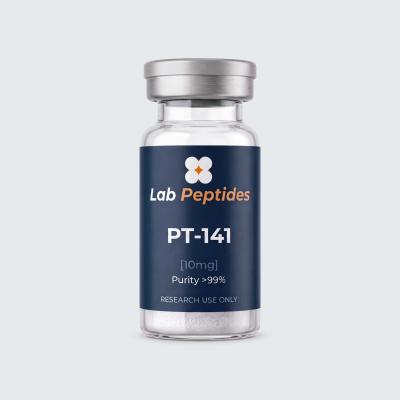
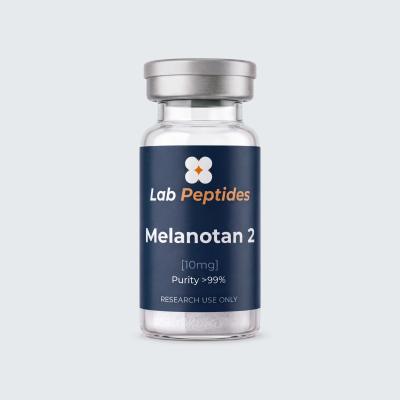
| Our product page | Melanotan 2 10 mg | PT-141 10 mg |
Both peptides share the same cyclic core and some of their effects (nausea, flushing, pigmentation). What separates them is mainly their development: large trials for one, pilot trials for the other.
Doses studied in the literature
| Study | Population | Bremelanotide dose |
|---|---|---|
| Rosen et al., 2004 | Healthy men / men with inadequate Viagra response | 0.3 to 10 mg SC / 4 and 6 mg SC |
| Diamond et al., 2004 | Healthy men and patients | Nasal, significant effect above 7 mg |
| Diamond et al., 2005 | 19 men | 7.5 mg nasal + 25 mg sildenafil |
| Diamond et al., 2006 | 18 women (arousal disorder) | 20 mg nasal, single dose |
| Safarinejad and Hosseini, 2008 | 342 men | 10 mg nasal, as needed |
| Clayton et al., 2016 | 327 women (efficacy) | 0.75, 1.25 or 1.75 mg SC, as needed |
| RECONNECT, 2019 | 1,267 women | 1.75 mg SC, as needed, at most 8 doses per month |
These figures describe what was administered in supervised trials, not recommendations. Nasal doses do not translate to the subcutaneous route: nasal absorption is highly variable.
Reconstitution protocol (research use only)
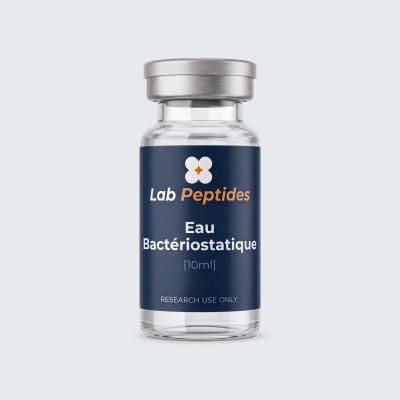
PT-141 is supplied lyophilised, in a 10 mg vial. It is reconstituted with bacteriostatic water (water for injection with 0.9% benzyl alcohol). The volume of water sets the concentration. The table converts to units on a U-100 insulin syringe, where 100 units equal 1 mL.
| Water added | Concentration | 1 unit (0.01 mL) | 10 units (0.1 mL) | 0.75 mg | 1.75 mg |
|---|---|---|---|---|---|
| 1 mL | 10 mg/mL | 0.1 mg | 1 mg | 7.5 units | 17.5 units |
| 2 mL | 5 mg/mL | 0.05 mg | 0.5 mg | 15 units | 35 units |
The 2 mL dilution is the easiest to read: 10 units equal 0.5 mg. Good handling practice:
- disinfect the septum with isopropyl alcohol;
- inject the water slowly down the side of the vial, never directly onto the powder;
- swirl the vial gently until fully dissolved, without shaking;
- check for particles or cloudiness before drawing any volume.
Stability and storage
Lyophilised PT-141 is best stored at -20 °C, protected from light and moisture. Once reconstituted, it is kept at 2 to 8 °C, still away from light. The commercial Vyleesi product is stored at or below 25 °C, but its formulation is not that of a vial reconstituted in the lab. In bacteriostatic water, use within the following weeks is the usual rule, with aseptic handling and no repeated freezing.
Tryptophan is sensitive to photo-oxidation. For degradation mechanisms in detail, see our guide to storing lyophilised peptides.
Safety: the signals to know
Bremelanotide is one of the few research peptides whose tolerability has been described in more than a thousand people. The signals are known and quantified:
- Nausea: the most common effect (40% in RECONNECT, 40.4% in the open-label extension), mainly after the first dose.
- Blood pressure: a transient rise of a few mmHg, hence the contraindication in uncontrolled hypertension or cardiovascular disease. This signal, amplified by the nasal route, led to the spray being dropped.
- Pigmentation: MC1R agonism remains. Hyperpigmentation becomes common with daily injections and is not always reversible.
- Liver: one case of acute hepatitis in the open-label extension, with no established causal link.
These data describe a controlled pharmaceutical product. For a research reagent, they presuppose proven identity and purity: mass spectrometry, HPLC and a certificate of analysis per batch, to be required from any supplier, ours included.
Regulatory status
- United States: Vyleesi has been FDA-approved since 21 June 2019, for premenopausal women only. In December 2023, Palatin sold Vyleesi to Cosette Pharmaceuticals, while retaining bremelanotide rights for obesity and erectile dysfunction.
- European Union: bremelanotide has no marketing authorisation. It does not appear in the EMA database of evaluated medicines (checked in October 2026), whereas its cousin afamelanotide (Scenesse) does. In 2013-2014, Palatin signed a licence option for Europe and obtained scientific advice from the EMA, with no known filing since.
- Men: no approval in erectile dysfunction.
Research continues elsewhere: the phase 2 BMT-801 trial (NCT06565611) combined bremelanotide with tirzepatide in obesity in 2025, with results announced by the company. In Europe, PT-141 remains a research reagent (RUO).
Frequently asked questions about PT-141
Does PT-141 work like Viagra?
No. Sildenafil acts on the blood vessels of erectile tissue. Bremelanotide acts in the brain, on hypothalamic melanocortin receptors. It produced responses in men with an inadequate response to sildenafil (Rosen et al., 2004). In women, its effect concerns reported desire, not genital blood flow (Diamond et al., 2006).
What dose has been studied?
The dose approved in the United States is 1.75 mg subcutaneously, at least 45 minutes before sexual activity, no more than once per 24 hours and no more than 8 times per month. Older studies explored 0.3 to 10 mg subcutaneously in men, and up to 20 mg intranasally.
What are the most common side effects?
Nausea (40%), flushing (20%), injection site reactions (13%) and headache (11%) in the phase III trials. Add to this a transient rise in blood pressure and a risk of localised pigmentation.
How does it differ from Melanotan II?
A single structural difference: the C-terminus is a free acid instead of an amide. MT-II remained an unapproved reagent. Bremelanotide became a drug in the United States after a phase III programme.
Is PT-141 approved in Europe?
No. No bremelanotide medicine is authorised in the European Union. It is sold as a research reagent, not for human use.
Conclusion
PT-141 is a rare case: a peptide born from a side effect of MT-II that became an approved drug after a phase III programme. It acts on desire through central melanocortin receptors, without relying on vasodilation. The RECONNECT trials show a real but modest effect and a well-described tolerability profile dominated by nausea. With no authorisation in Europe, it remains a reference probe for studying the melanocortin system and the neurobiology of desire.
Order your PT-141 10 mg: lyophilised vial, stock in France, shipped from France. For comparative protocols, Melanotan 2 10 mg is also available.