Selank: complete guide to the Russian anxiolytic peptide in research
Watch the video breakdown
5 minutes, sources cited, in French. Open on YouTube and subscribe
Selank is a synthetic heptapeptide (Thr-Lys-Pro-Arg-Pro-Gly-Pro) designed at the Institute of Molecular Genetics of the Russian Academy of Sciences in Moscow as a stabilised analogue of tuftsin, a small natural peptide released from immunoglobulins. Developed together with the Zakusov Institute of Pharmacology, it is registered in Russia as 0.15% nasal drops for anxiety states. Clinical studies do exist, but they are few, small, published mostly in Russian by the teams that designed the molecule, and none has been replicated by a Western group.
This guide sets out what is actually known about Selank: structure and stability, the intranasal route, the mechanisms studied (enkephalinases, GABA, serotonin, cytokines, gene expression), the Russian clinical trials and their limits, the comparison with benzodiazepines as it appears in the studies, doses used in the literature, reconstitution and storage, regulatory status and the differences from Semax. The products mentioned are intended exclusively for in vitro and in vivo research (RUO), not for human use. For an overview of peptides studied in cognition, see also our guide to Semax, Selank, Dihexa and peptide nootropics.
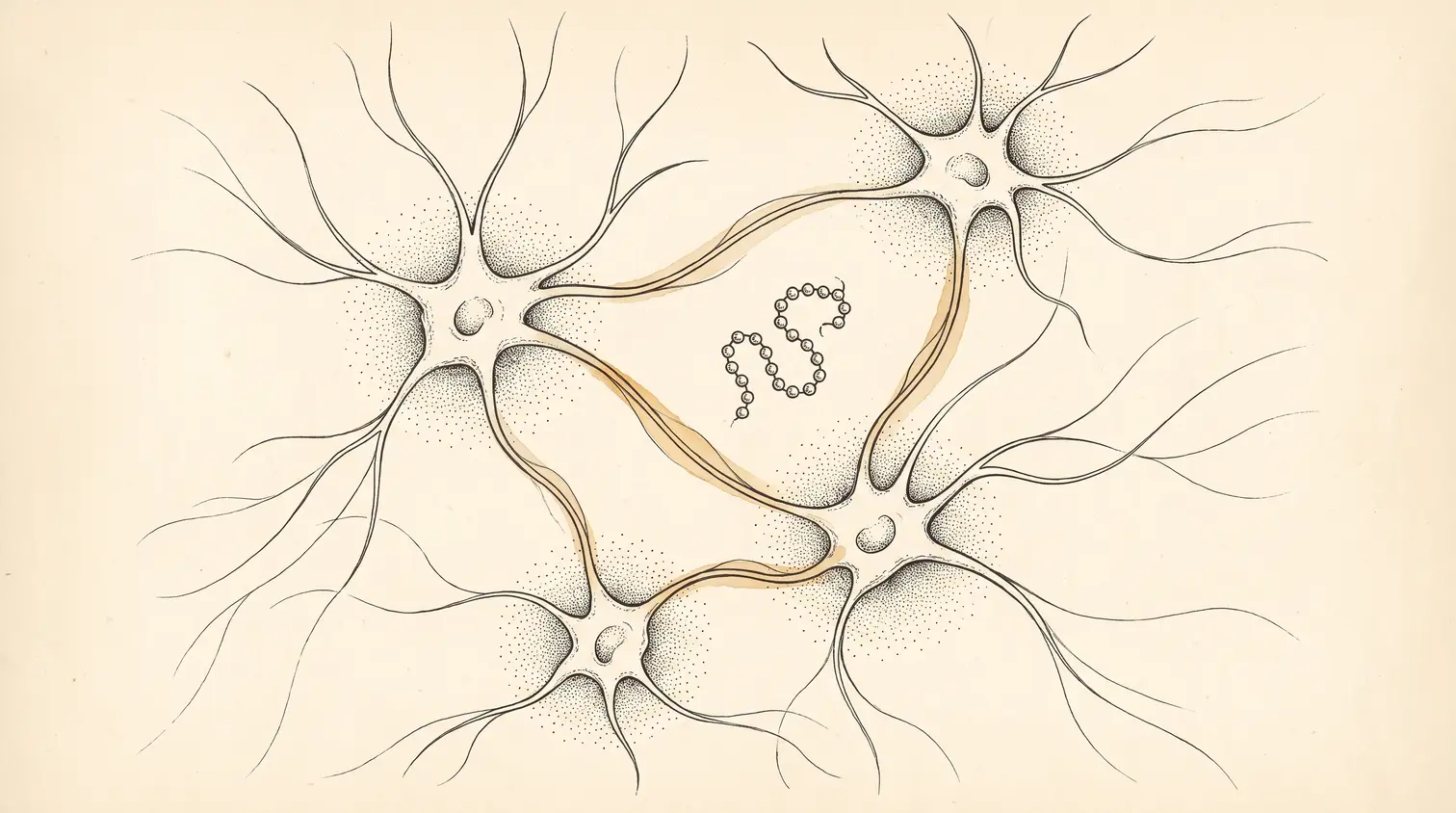
Molecular identity: from tuftsin to Selank
Selank starts from tuftsin, a tetrapeptide with the sequence Thr-Lys-Pro-Arg isolated in 1970 at Tufts University by Victor Najjar and Kenji Nishioka (Nature, 1970). Tuftsin is released from the heavy chain of immunoglobulin G and stimulates phagocytosis by macrophages and neutrophils. Its weakness, like that of most small peptides, is fragility: blood peptidases cut it quickly.
The Moscow researchers extended tuftsin at its C-terminus with three natural amino acids, Pro-Gly-Pro. According to papers from the Institute of Molecular Genetics (Volkova et al., Frontiers in Pharmacology, 2016; Filatova et al., 2017), this extension was chosen to improve the peptide's metabolic stability and prolong its action. The same Pro-Gly-Pro motif, from the "glyproline" family, sits at the end of Semax, designed at the same institute.
| Parameter | Value |
|---|---|
| Sequence | Thr-Lys-Pro-Arg-Pro-Gly-Pro (TKPRPGP) |
| Length | 7 amino acids (heptapeptide) |
| Molecular formula | C33H57N11O9 |
| Molecular weight | 751.9 g/mol (monoisotopic 751.43 Da) |
| CAS number | 129954-34-3 |
| Other names | TP-7, Selanc |
| Origin | Institute of Molecular Genetics (Russian Academy of Sciences), with the Zakusov Institute of Pharmacology |
Selank is a linear peptide made only of natural L-amino acids: no modified residue, no lipid chain, no cyclisation, unlike modern metabolic peptides such as semaglutide.
Stability and breakdown in the body
The Pro-Gly-Pro motif slows breakdown but does not prevent it. Zolotarev's team (Bioorganicheskaya Khimiya, 2006) tracked tritium-labelled Selank in plasma and after intranasal dosing in animals. The main breakdown products identified are the pentapeptide TKPRP, the tripeptide TKP and the dipeptides RP and GP. Part of the biological activity may in fact come from these fragments: in Kolomin et al. (Molecular Immunology, 2014), the dipeptide Gly-Pro reproduced in mice much of Selank's effect on the expression of immune genes.
The Russian product leaflet states that Selank's plasma concentration falls progressively over 5 to 5.5 minutes and claims an absolute nasal bioavailability of 92.8%. These figures come from the manufacturer and, to our knowledge, have not been published in an indexed human pharmacokinetic study. How effects described over hours or days fit with a plasma presence of a few minutes remains an open question.
The intranasal route
In almost all Russian studies, in animals and humans alike, Selank is given through the nose. The rationale rests on a distribution study: Ashmarin et al. (Bioorganicheskaya Khimiya, 2008) compared intraperitoneal, intranasal, intragastric and intravenous routes in rats using tritium-labelled glyprolines. They concluded that the intranasal route was the most effective for delivering these peptides to the central nervous system. They also noted strong accumulation in gastric tissue, whatever the route.
The route matters. In mice, Vasil'eva et al. (Eksperimental'naya i Klinicheskaya Farmakologiya, 2016) compared 300 µg/kg per day for 5 days given intraperitoneally and intranasally. The anxiolytic effect appeared only in the BALB/c strain, which is naturally more anxious. More strikingly, the intraperitoneal route raised binding of a GABA receptor marker in the frontal cortex by 38%, whereas the intranasal route raised binding of an NMDA receptor marker in the hippocampus by 23%, with no effect on GABA. No human study measures how much reaches the brain.
Mechanisms studied
Selank has no identified receptor. The proposed mechanisms rest on in vitro or rodent experiments; here is what those studies show.
Inhibition of enkephalin-degrading enzymes
Enkephalins are endogenous opioid peptides involved in the response to stress and pain, destroyed within minutes by peptidases. Zozulya et al. (Bulletin of Experimental Biology and Medicine, 2001) reported that patients with generalised anxiety disorder have a shortened half-life of blood leu-enkephalin, which is not the case in panic disorder or agoraphobia. In human plasma, Selank inhibited enkephalin hydrolysis in a dose-dependent way with an IC50 of 15 µM. A second study from the same group (Kost et al., 2001) found an IC50 of 20 µM for Selank and 10 µM for Semax on human serum enzymes; the pentapeptide fragments kept this effect, shorter fragments did not.
An IC50 of 15 to 20 µM is high; nothing shows that it is reached in vivo after a nasal drop.
The GABA system
Russian authors liken Selank to benzodiazepines, which potentiate the GABA-A receptor. Three studies test this hypothesis. Volkova et al. (Frontiers in Pharmacology, 2016) gave rats 300 µg/kg of Selank or GABA intranasally and measured the expression of 84 neurotransmission genes in the frontal cortex: 45 genes changed expression at 1 hour and 22 at 3 hours, with correlated profiles between Selank and GABA. In human IMR-32 neuroblastoma cells, however, Filatova et al. (2017) found no change in GABAergic gene expression with Selank alone; the peptide only altered the response to GABA when the two were combined. Finally, Vyunova et al. (Protein and Peptide Letters, 2018), working on rat brain membranes, described Selank as a positive allosteric modulator of labelled GABA binding and observed that it blocked the modulating effect of diazepam and olanzapine, suggesting distinct but partly overlapping binding sites.
Serotonin and monoamines
Semenova et al. (2009) worked on 87 rats whose serotonin synthesis had been blocked with p-chlorophenylalanine: Selank increased serotonin metabolism in the brainstem 30 minutes after injection, whereas tuftsin alone did not. In mice, Narkevich et al. (2008) observed with 0.3 mg/kg a rise in hypothalamic noradrenaline in two strains, but opposite strain-dependent effects on dopamine metabolites and a fall in hippocampal serotonin in BALB/c mice only. Its effects therefore depend heavily on the biological background.
Cytokines and interleukin 6
Tuftsin's legacy shows up in the immunological work. Uchakina et al. (Zhurnal Nevrologii i Psikhiatrii, 2008) reported that in vitro, at 0.1 µM, Selank suppressed IL-6 gene expression in blood cells from depressed patients but not from healthy controls, while IL-6 concentration in these cultures rose; in anxious patients treated for 14 days, they described shifts in the Th1/Th2 cytokine balance. In rats under 20 days of social stress, Yasenyavskaya et al. (2021) measured lower IL-1β, IL-6, TNF-α and TGF-β1 with Selank at 100 µg/kg per day intraperitoneally.
Gene expression and BDNF
The Institute of Molecular Genetics has studied Selank's effect on the transcriptome extensively. After a single intranasal dose of 200 µg/kg in rats, Kolomin et al. (2013) observed a more than 2-fold change in mRNA for 36 hippocampal genes, and for 20 genes after repeated dosing, mostly genes for membrane proteins. In mouse spleen, 34 of 84 inflammation genes changed expression after a 100 µg/kg injection (Kolomin et al., Regulatory Peptides, 2011). On BDNF, a neurotrophic factor linked to plasticity, Inozemtseva et al. (2008) reported regulation of its expression in the rat hippocampus after intranasal dosing, and Kolik et al. (2019) showed that at 0.3 mg/kg per day for 7 days, Selank prevented in rats the memory impairment linked to 30 weeks of alcohol intake and the accompanying rise in BDNF.
These data describe changes in expression, not an established mechanism: it is unknown which of them cause the behavioural effects and which are merely a consequence.
Preclinical data: behaviour in animals
In rodents, Selank is mainly studied in anxiety and withdrawal models. Kolik et al. (2014) reported that a single 0.3 mg/kg injection abolished anxiety during acute alcohol withdrawal in rats (elevated plus maze, social interaction test) without changing alcohol intake. Konstantinopolsky et al. (2022) observed, in naloxone-precipitated morphine withdrawal, a 39.6% reduction in the overall withdrawal index, against 49.3% for diazepam at 2 mg/kg. Kasian et al. (Behavioural Neurology, 2017) described, in an unpredictable chronic mild stress model, a stronger effect for Selank combined with diazepam than for either compound alone.
Use in Russia and human studies
In Russia, Selank is marketed as 0.15% nasal drops, i.e. 1.5 mg of peptide per ml, with methyl parahydroxybenzoate as preservative. According to the leaflet published by the Russian RLS register, it is indicated in adults aged 18 and over for anxiety states and the prevention of stress-related disorders, sold without prescription, at 2 drops in each nostril 3 times a day for 14 days, with a course that can be repeated after 1 to 3 weeks.
The published clinical studies are as follows:
| Study | Population | Comparator | Reported result |
|---|---|---|---|
| Zozulya et al., 2008 | 62 patients (generalised anxiety, neurasthenia) | Medazepam (30 Selank vs 32) | Similar anxiolytic effect; additional anti-asthenic and stimulant effects with Selank |
| Uchakina et al., 2008 | Anxious patients, 14 days | Not described in the abstract | Change in the Th1/Th2 cytokine balance |
| Medvedev et al., 2014 | 60 patients (anxiety, phobic, somatoform disorders) | Phenazepam | Marked anxiolytic effect, lasting one week after stopping |
| Medvedev et al., 2015 | 70 patients | Phenazepam alone (30) vs phenazepam plus Selank (40) | Earlier effect and fewer phenazepam side effects in the combined group |
| Panikratova et al., 2020 | 52 healthy volunteers | Placebo and Semax | Change in resting-state brain connectivity (functional MRI), no clinical measure |
How strong is this evidence?
It needs saying plainly: the level of evidence is low. The trials include a few dozen patients. The abstracts describe neither randomisation nor double blinding, and the anxiety trials have no placebo group: Selank is compared with a benzodiazepine, which cannot separate a real effect from a placebo effect shared by both arms. Most publications are in Russian, in Russian journals, and co-signed by the molecule's designers. A search of the international ClinicalTrials.gov registry (October 2026) finds no trial on Selank. And no Western team has published a replication.
Outside views point the same way. In the Journal of Clinical Pharmacology (2021), Doyno and White describe phenibut and Selank as "poorly studied Russian drugs" sold in the United States as dietary supplements. The Belgian control laboratory Sciensano (Vanhee et al., Drug Testing and Analysis, 2020) identified Selank and Semax in seized preparations and noted that, to its knowledge, these peptides have not completed any clinical trial in the international sense.
Selank and benzodiazepines: what the studies say
The comparison with benzodiazepines is central to how Selank is presented, and it deserves a precise reading. What is published:
- Comparable anxiolytic efficacy to medazepam (Zozulya et al., 2008) and a marked effect in a study against phenazepam (Medvedev et al., 2014), with no placebo in either case.
- No typical benzodiazepine effects (amnesia, withdrawal, dependence): this claim is repeated in the introductions of Institute of Molecular Genetics papers, which refer back to Russian clinical work. No independent dependence study has been published.
- Combination rather than replacement: in 70 patients, adding Selank to phenazepam sped up the effect and reduced sedation and attention and memory problems (Medvedev et al., 2015). In rats, Selank plus diazepam was the most effective option under chronic stress (Kasian et al., 2017).
- Interaction at the receptor: on brain membranes, Selank blocked diazepam's modulating effect on GABA binding (Vyunova et al., 2018).
- Withdrawal in animals: an effect close to, and slightly below, diazepam in rat morphine withdrawal (Konstantinopolsky et al., 2022).
These results describe small trials and laboratory comparisons, not therapeutic equivalence.
Selank and Semax: two cousins, two profiles
| Selank | Semax | |
|---|---|---|
| Sequence | Thr-Lys-Pro-Arg-Pro-Gly-Pro | Met-Glu-His-Phe-Pro-Gly-Pro |
| Parent peptide | Tuftsin (immunoglobulin G) | ACTH 4-7 fragment |
| Profile studied | Anxiolytic, immunomodulator | Neurological recovery, attention |
| Most cited mechanism | GABA, enkephalinases | BDNF, monoamine systems |
| Enkephalinase inhibition (IC50, human serum) | 20 µM | 10 µM |
| Use in Russia | Anxiety states | Neurology, stroke |
The two heptapeptides share their institute of origin, the Pro-Gly-Pro tail, the nasal route and the same evidence limits. The functional MRI study by Panikratova et al. (2020) is one of the few to compare them directly: in 52 healthy volunteers, it describes shared and specific effects of each on connectivity between the right amygdala and the right temporal cortex.
Doses studied in the literature
- Rat, intranasal: 300 µg/kg as a single dose (Volkova et al., 2016), presented as the most effective dose against anxiety; 200 µg/kg as a single dose or a course (Kolomin et al., 2013).
- Rat, intraperitoneal: 0.3 mg/kg as a single dose (Kolik et al., 2014; Konstantinopolsky et al., 2022) or 0.3 mg/kg per day for 7 days (Kolik et al., 2019); 100 µg/kg per day for 20 days (Yasenyavskaya et al., 2021).
- Mouse: 100 µg/kg intraperitoneally (Kolomin et al., 2011); 300 µg/kg per day for 5 days intraperitoneally or intranasally (Vasil'eva et al., 2016).
- In vitro: 0.1 µM on human blood cells (Uchakina et al., 2008); IC50 of 15 to 20 µM on plasma enkephalinases.
- Human: the Russian product contains 1.5 mg/ml, at 2 drops per nostril 3 times a day for 14 days. The clinical trial abstracts consulted do not state the dose given, and the leaflet does not state the volume of a drop.
Reconstitution protocol (research use only)
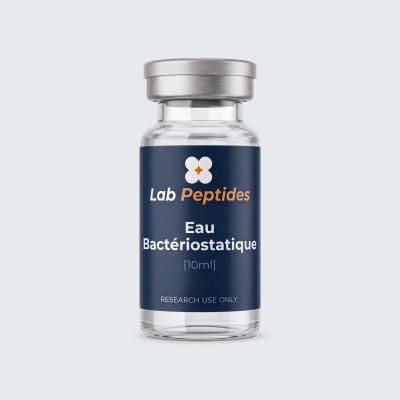
Selank is supplied lyophilised. It is highly water-soluble, with three polar or charged residues (Thr, Lys, Arg) out of seven. Reconstitution uses bacteriostatic water (0.9% benzyl alcohol), injected slowly down the vial wall, then mixed by gentle swirling, without shaking.
| Vial | Water volume | Concentration | 10 units on a U-100 syringe (0.1 ml) |
|---|---|---|---|
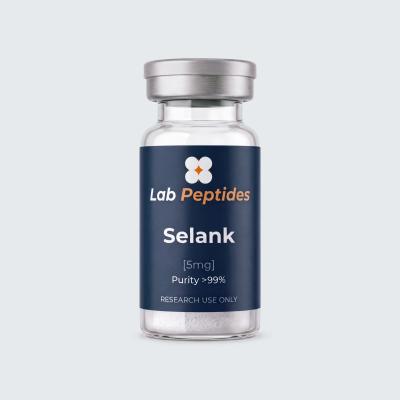
| Selank 5 mg | 2 ml | 2.5 mg/ml | 250 µg |
| Selank 5 mg | 1 ml | 5 mg/ml | 500 µg |
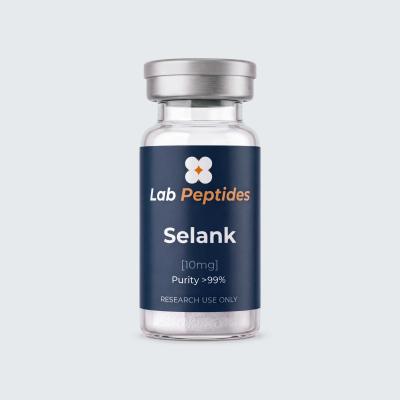
| Selank 10 mg | 2 ml | 5 mg/ml | 500 µg |
| Selank 10 mg | 4 ml | 2.5 mg/ml | 250 µg |
On a U-100 syringe, 100 units equal 1 ml, so each unit is 0.01 ml. At 2.5 mg/ml, 1 unit contains 25 µg; at 5 mg/ml, 50 µg. For comparison, the Russian product is at 1.5 mg/ml, a concentration obtained with about 3.3 ml for 5 mg or 6.7 ml for 10 mg. For nasal-route research protocols, the choice of solvent matters: the Russian product uses purified water with a paraben preservative, not benzyl alcohol.
Stability and storage
Lyophilised Selank keeps best at -20 °C, away from light and moisture; short-term storage at 2-8 °C is acceptable. The Russian leaflet specifies storing the nasal solution at 2 to 8 °C, not frozen, then for no more than 15 days at up to 25 °C once opened. Once reconstituted in bacteriostatic water, the vial is kept refrigerated and is best used within the following weeks, with aseptic handling. Its sequence contains neither methionine nor cysteine, so it is not very prone to oxidation; the main risk is enzymatic or bacterial hydrolysis in case of contamination. For good practice in detail, see our guide to storing lyophilised peptides.
Safety and reported signals
The Russian leaflet lists only two adverse effects, of unknown frequency: allergic reactions, including delayed ones, and an unpleasant taste when the solution runs into the throat. It contraindicates pregnancy, breastfeeding and age under 18. Published trials describe good tolerability, but in samples too small and over periods too short to detect rare or late effects. No independent long-term toxicology, dependence or interaction data have been published outside Russia.
Regulatory status
Selank is a medicine registered in Russia and sold without prescription. It is authorised neither by the European Medicines Agency nor by the US FDA, and no trial on it is registered on ClinicalTrials.gov. In France and the European Union it falls under research use (RUO) and cannot be presented as a medicine.
Frequently asked questions about Selank
Is Selank a natural peptide?
No. It is synthetic, but built from a natural peptide, tuftsin (Thr-Lys-Pro-Arg), to which the Pro-Gly-Pro motif was added for stability.
Does Selank act like a benzodiazepine?
Russian studies describe it as an allosteric modulator of GABA binding, with an anxiolytic effect comparable to medazepam in a 62-patient trial. But its binding site appears distinct from diazepam's, and no large placebo-controlled trial has been published.
Are there Western studies on Selank?
No clinical trials. Western publications are critical reviews (Doyno and White, 2021) and work by control laboratories identifying the molecule in seized products (Sciensano, 2020).
What is the difference between Selank and Semax?
Same institute, same Pro-Gly-Pro tail, same nasal route. Selank derives from tuftsin and is studied as an anxiolytic; Semax derives from an ACTH fragment and is studied in neurology and attention.
How do you reconstitute a 10 mg vial?
With 2 ml of bacteriostatic water you get 5 mg/ml: on a U-100 syringe, 10 units contain 500 µg. With 4 ml you get 2.5 mg/ml and 10 units contain 250 µg.
Conclusion
Selank has a genuine scientific history: a rational design starting from tuftsin, more than twenty years of work on enkephalinases, GABA, cytokines and gene expression, and medicine status in Russia. Its human record nonetheless remains thin: a few Russian trials of 60 to 70 patients, without placebo, never replicated elsewhere. It is an interesting research tool for studying peptide modulation of anxiety and immunity, not a molecule whose clinical efficacy is established by international standards.
Order your Selank: 5 mg and 10 mg vials, stock in France, fast shipping. For research use only.