GHK-Cu: complete guide to the copper peptide (genes, skin, healing, dosage)
GHK-Cu is a complex of a naturally occurring human tripeptide, glycyl-L-histidyl-L-lysine (GHK), with a copper(II) ion. First isolated from human plasma in 1973, it has become one of the most studied peptides in dermatology and tissue-repair biology: collagen synthesis, wound healing, angiogenesis, hair follicles and, since 2010, a series of gene-expression analyses crediting it with an effect on several thousand human genes. It is also a peptide where the gap between abundant preclinical data and rare controlled human trials, nearly all of them topical, deserves to be stated plainly.
This guide brings together the published data on GHK-Cu's chemical identity, its copper chelation, its mechanism, the gene-expression work (Connectivity Map), wound-healing, skin and hair studies, the human trials, the concentrations and doses used in the literature, reconstitution of a lyophilized vial, storage, copper-related safety and regulatory status. The products mentioned are intended exclusively for in vitro and in vivo research use only (RUO).

Molecular identity and copper chemistry
GHK is a tripeptide with the sequence Gly-His-Lys (formula C14H24N6O4, molar mass 340.38 g/mol). Its copper complex, listed as prezatide copper or copper tripeptide-1 (the INCI name used in cosmetics), carries CAS number 89030-95-5; PubChem gives it a molar mass of 402.92 g/mol. In a theoretical 1:1 complex, copper therefore accounts for about 16% of the mass, a useful figure when reasoning about metal intake (see the safety section). The actual commercial form depends on the salt (notably acetate) and on copper occupancy, which a certificate of analysis should state.
The GHK sequence is not a laboratory invention. It occurs in the alpha 2 chain of type I collagen and in the SPARC protein: after an injury, proteolysis of these proteins releases GHK at the wound site. Lane et al. (Journal of Cell Biology, 1994) showed that SPARC-derived peptides containing this motif bind copper and stimulate angiogenesis. Hence the hypothesis, put forward in the 1980s by Maquart's team, of GHK as an "early signal" of repair.
Copper chelation is the central chemical property. At neutral pH, spectroscopic measurements describe a mainly monomeric 1:1 complex in which copper is coordinated by nitrogen atoms, including the histidine imidazole; the lysine side chain mostly comes into play only at alkaline pH. The reported affinity constant is log K = 16.44, in the same range as the copper-transport site of albumin (log K = 16.2): GHK can therefore take copper from albumin and vice versa. Bound to GHK, copper's redox activity is strongly dampened, allowing a potentially pro-oxidant metal to be carried in a low-reactivity form. Pickart et al. (Nature, 1980) saw the tripeptide as a facilitator of copper uptake into cells.
Discovery and physiological levels
GHK was described in 1973 by Pickart and Thaler (Nature New Biology, 1973) as a human serum tripeptide that prolongs the survival of normal liver cells and stimulates the growth of hepatoma cells.
According to Pickart's reviews, plasma GHK is about 200 ng/mL (10-7 M) around age 20 and falls to about 80 ng/mL at age 60. This often-quoted decline comes mainly from the team that discovered the molecule and has not been confirmed in large independent cohorts.
Mechanism of action
No specific GHK receptor has been identified. The reported effects fall into three levels.
Extracellular matrix remodeling. Maquart et al. (FEBS Letters, 1988) showed that GHK-Cu stimulates collagen synthesis in cultured fibroblasts at very low concentrations, around 1 to 10 nanomolar. Later work by the same group (Siméon, Wegrowski et al., 1992 to 2000) extended the effect to sulfated glycosaminoglycans, dermatan sulfate, chondroitin sulfate and the small proteoglycan decorin. Above all, GHK-Cu modulates both metalloproteinases (notably MMP-2) and their inhibitors TIMP-1 and TIMP-2. It therefore regulates both the synthesis and the breakdown of the matrix: a remodeling role.
Copper supply and handling. Copper is the cofactor of lysyl oxidase (cross-linking of collagen and elastin), superoxide dismutase, cytochrome c oxidase and ceruloplasmin. The historical hypothesis attributes part of GHK-Cu's effects to delivering copper to these enzymes in a low-toxicity form.
Anti-inflammatory and antioxidant action. In vitro, GHK neutralizes lipid-peroxidation products such as acrolein and 4-hydroxynonenal, and the GHK-Cu complex reduces iron release from ferritin by 87% (Miller et al., 1990). In mice, Park et al. (Oncotarget, 2016) observed that GHK-Cu protects against lipopolysaccharide-induced acute lung injury, lowering TNF-alpha and IL-6 through inhibition of the NF-kappaB p65 and p38 MAPK pathways.
Gene expression: the Connectivity Map data
The Broad Institute's Connectivity Map is a database of transcriptional profiles of human cells exposed to more than 1,300 molecules. It opened a new angle on GHK.
In 2010, Hong et al. searched it for molecules able to reverse the expression signature of metastatic colorectal cancer: out of 1,309 molecules, only two could, GHK (at 1 micromolar) and the alkaloid securinine. In 2012, Campbell et al. (Genome Medicine) profiled 64 lung samples from smokers with COPD (8 regions x 8 lungs) and identified 127 genes associated with emphysema severity. The Connectivity Map pointed to GHK as a molecule able to reverse this signature, notably by activating the TGF-beta pathway. The authors then checked it in vitro: GHK restored the ability of lung fibroblasts from COPD patients to contract and remodel collagen I. This is the strongest study of the set, because it pairs the computational prediction with cell-based validation.
Pickart and Margolina (International Journal of Molecular Sciences, 2018) then published their analysis of the same data: according to them, 31.2% of human genes have their expression changed by at least 50% by GHK, 59% upward and 41% downward. Their table lists, for example, 1,569 genes stimulated and 583 suppressed in the 50 to 99% change band. They also report 41 ubiquitin-proteasome genes stimulated against a single one suppressed.
These figures should be read for what they are: messenger RNA changes measured in Connectivity Map cancer cell lines at a given concentration, not effects observed in a living organism. A change in expression is neither a change in protein nor a clinical effect.
Wound healing: what animal models show
Wound healing is the best-documented area in animals:
- Rabbit: Cangul et al. (Veterinary Dermatology, 2006) and then Gul et al. (2008) report better contraction of open wounds and better granulation tissue formation with a topical tripeptide-copper complex, along with higher antioxidant enzymes and more new blood vessels.
- Healthy and diabetic rats: Arul et al. (2005, 2007) incorporated biotinylated GHK into a collagen matrix; treated wounds showed better epithelialization, more tissue glutathione and ascorbate, and a 9-fold increase in collagen synthesis in healthy rats.
- Ischemic wounds: Canapp et al. (Veterinary Surgery, 2003) observed faster healing in rats with lower MMP-2 and MMP-9.
- Ligament: Fu et al. (Journal of Orthopaedic Research, 2015) randomized 72 rats after anterior cruciate ligament reconstruction into three groups (saline, GHK-Cu 0.3 mg/mL or 3 mg/mL, weekly intra-articular injections for 4 weeks). At 6 weeks, knee laxity was lower with GHK-Cu, but the advantage had disappeared by 12 weeks, after treatment stopped.
Real effects, then, but sometimes transient. Another limitation noted by Pickart: carboxypeptidases in chronic wound exudate rapidly degrade GHK.
Skin, collagen and hair: the human studies
In humans, all available efficacy data concern the topical route. They are few, often small, and some were published only as conference abstracts. A 2026 systematic review (Mateescu et al., Pharmaceutics) concludes that clinical evidence remains scarce and that GHK-Cu should be regarded as "promising but unproven" as a therapeutic.
| Study | Population | Protocol | Reported result |
|---|---|---|---|
| Abdulghani et al., 1998 | Women, thigh skin | GHK-Cu cream vs vitamin C vs retinoic acid, 12 weeks | Improved collagen production in 70% of subjects (50% vitamin C, 40% retinoic acid) |
| Leyden et al., 2002 (AAD meeting) | 71 women, facial photoaging | GHK-Cu facial cream, 12 weeks | Increased skin density and thickness, shallower wrinkles |
| Leyden et al., 2002 (AAD meeting) | 41 women, eye area | Eye cream, 12 weeks, vs placebo and vitamin K | Better than placebo and vitamin K on wrinkles |
| Badenhorst et al., 2016 | Female volunteers, double-blind | GHK-Cu in nano-lipid carrier, twice daily, 8 weeks | Wrinkle volume -31.6% vs Matrixyl 3000; -55.8% vs control serum |
| Miller et al., 2006 | 13 patients after CO2 laser | Skincare with or without GHK-Cu, 12 weeks | No objective difference (erythema, wrinkles); higher satisfaction with GHK-Cu |
| Bishop et al., 1992 | 86 patients, venous ulcers | 0.4% tripeptide-copper cream vs silver sulfadiazine vs placebo | No difference from placebo |
| Bo et al., 2026 | 18 healthy volunteers, eyebrows | 2% GHK-Cu serum vs vehicle, split-face, double-blind, 12 weeks | Improved hair count and diameter, no serious adverse events |
Two negative results stand out: Bishop et al. (Journal of Vascular Surgery, 1992) on venous ulcers, and Miller et al. (Archives of Facial Plastic Surgery, 2006) after CO2 laser resurfacing. They do not show that GHK-Cu is inactive. They show that convincing repair biology in culture does not automatically translate into measurable benefit in humans, especially on a chronic wound where the peptide is degraded.
Hair. The most-cited study on this topic, Pyo et al. (Archives of Pharmacal Research, 2007), is not about GHK-Cu but about its analog AHK-Cu (alanyl-histidyl-lysine-copper). Between 10-12 and 10-9 M, it elongated human hair follicles ex vivo and stimulated dermal papilla cell proliferation. For GHK-Cu itself, the most direct human data is the 2026 eyebrow trial, small (18 subjects) and published in a low-circulation journal. A phase 2 trial (NCT07437586, CuHeal), started in February 2026 in China, is testing a 0.1% GHK-Cu gel on acute skin wounds in 60 participants; it is still recruiting and has posted no results.
Topical vs injectable: two different research tracks
The topical route is the one used in human trials and cosmetics. GHK-Cu crosses the stratum corneum in measurable amounts: Hostynek, Dreher and Maibach (Inflammation Research, 2010) applied an aqueous solution of 0.68% copper as tripeptide to human skin ex vivo. The permeability coefficient was 2.43 x 10⁻⁴ cm/h; 136.2 µg/cm2 of copper crossed over 48 hours and about 82 µg/cm2 remained as a depot in the skin. Liposomes, nanocarriers and microneedles are being studied to improve this. A 2025 review (Mortazavi et al., BioImpacts) nevertheless notes a surprising absence of robust clinical trials with cosmetic forms.
The injectable route (subcutaneous, intraperitoneal, intra-articular) has only been studied in animals. Pickart reports "systemic" healing in rats, mice and pigs after injection at a site distant from the wound. No published study describes the pharmacokinetics of injected GHK-Cu in humans. By analogy with small hydrophilic peptides, free GHK should have a short systemic half-life, its main degradation route being proteolysis into amino acids. Released copper is taken up by albumin and ceruloplasmin, then cleared through the bile. This is an extrapolation from the 2026 review, not a measurement.
Comparison with related peptides
- AHK-Cu: an analog in which alanine replaces glycine. It carries the ex vivo hair-follicle data (Pyo et al., 2007) and is mostly studied for hair.
- Palmitoyl peptides (Matrixyl): copper-free matrikine peptides designed to stimulate the matrix. In the Badenhorst et al. trial, GHK-Cu outperformed Matrixyl 3000 on wrinkle volume. It is a single, small trial. For an overview of cosmeceutical peptides, see our article GHK-Cu, Matrixyl, Argireline and the science of cosmeceuticals.
- BPC-157 and TB-500: tissue-repair peptides with distinct mechanisms (angiogenesis and cell-migration pathways) and no copper chelation. They are often combined with GHK-Cu in research blends; their differences are covered in the BPC-157 vs TB-500 comparison.
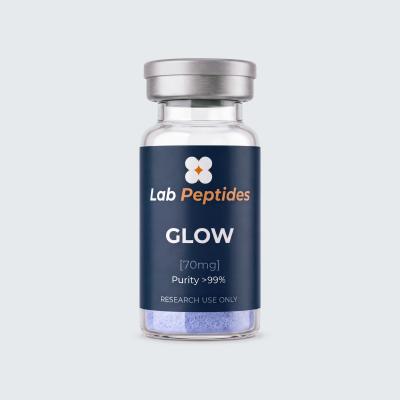
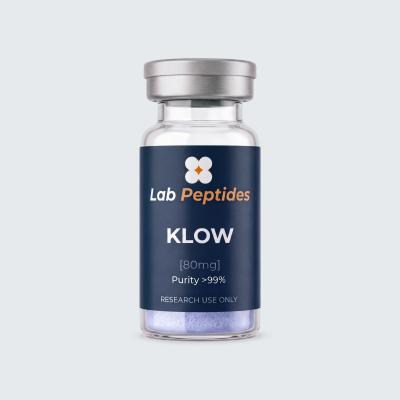
The Glow 70 mg blend combines GHK-Cu with BPC-157 and TB-500 in a single vial. Klow 80 mg is another blend in the range built around GHK-Cu, with its composition detailed on its product page.
Concentrations and doses studied in the literature
No dose-finding study has been conducted in humans, by any route. The published values are as follows, each attributed to its source:
- In vitro: effects on collagen and glycosaminoglycans between 1 and 10 nM (Maquart, Wegrowski et al.); elastin and collagen increased between 0.01 and 100 nM in dermal fibroblasts (Badenhorst et al., 2016); gene-signature reversal at 1 µM (Connectivity Map).
- Topical in humans: 0.4% cream (Bishop et al., 1992); 0.1% gel (NCT07437586); 2% serum (Bo et al., 2026).
- Animal: 0.3 and 3 mg/mL by weekly intra-articular injection in rats (Fu et al., 2015); 0.5 µg/kg intraperitoneally in the rat behavioral tests cited by Pickart.
- Untested extrapolation: Pickart et al. (2015) estimate, from animal models, that about 100 to 200 mg of GHK might produce effects in humans. This author estimate has never been evaluated in a trial.
Research protocols circulating outside the scientific literature most often cite 1 to 2 mg per day subcutaneously, in 4- to 8-week cycles followed by 2 to 4 weeks off. The sites that compile them state themselves that they are not based on any clinical trial.
Reconstitution (research use only)
GHK-Cu solution takes on the characteristic blue color of copper(II) complexes. The lyophilized powder is reconstituted with bacteriostatic water (0.9% benzyl alcohol), injected slowly down the side of the vial. Then swirl the vial gently, without shaking, until dissolved.
On a U-100 insulin syringe, 100 units (IU) equal 1 mL, so 1 IU = 0.01 mL. Worked examples:
| Vial | Bacteriostatic water | Concentration | 1 mg = | 2 mg = |
|---|---|---|---|---|
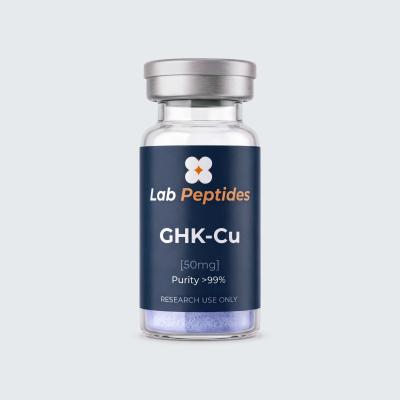
| GHK-Cu 50 mg | 1 mL | 50 mg/mL | 2 IU (0.02 mL) | 4 IU (0.04 mL) |
| GHK-Cu 50 mg | 2 mL | 25 mg/mL | 4 IU (0.04 mL) | 8 IU (0.08 mL) |
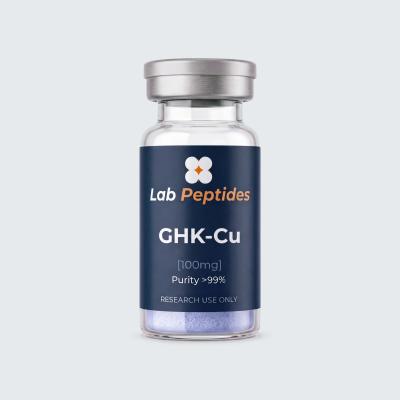
| GHK-Cu 100 mg | 2 mL | 50 mg/mL | 2 IU (0.02 mL) | 4 IU (0.04 mL) |
| GHK-Cu 100 mg | 4 mL | 25 mg/mL | 4 IU (0.04 mL) | 8 IU (0.08 mL) |
A more dilute concentration (25 mg/mL) gives volumes that are easier to read on the syringe, at the cost of a larger volume of solution. At 1 to 2 mg per day, a 50 mg vial covers 25 to 50 days of protocol and a 100 mg vial 50 to 100 days. For short protocols, the 50 mg format limits how long the reconstituted solution has to be stored.
Stability and storage
Lyophilized GHK-Cu keeps in the refrigerator or freezer, protected from light and moisture. Once reconstituted, it is stored at 2 to 8 °C. For solutions in bacteriostatic water, common laboratory practice limits use to about four weeks under aseptic handling. No published study sets a GHK-Cu-specific shelf life.
Two chemical points matter. First, copper coordination depends on pH: in acidic conditions the complex can dissociate. Second, strong chelating agents (EDTA, for example) can strip the copper. The 2026 review stresses this: a vial labeled "GHK-Cu" is not guaranteed to contain intact complex unless copper occupancy has been checked. General rules are covered in our guide on storing lyophilized peptides.
Safety and copper intake
Topically, GHK-Cu has been used in cosmetics for decades. Published trials report no serious adverse events, but their sample sizes are too small to detect rare effects. For the injectable route, there are no human safety data.
Copper is the first point to consider. EFSA (2023) concludes that no copper retention is expected in adults at a total intake of 5 mg per day, and set an acceptable daily intake of 0.07 mg/kg body weight. The US upper limit is 10 mg per day. These values concern the oral route and do not transfer directly to injection. As an order of magnitude, 2 mg of 1:1 GHK-Cu complex provides about 0.3 mg of copper. EFSA stresses that chronic copper toxicity works through liver accumulation, with Wilson disease as the model. Copper-metabolism disorders are therefore an obvious exclusion criterion in any protocol.
Regulatory signals point the same way. In 2023, the US FDA listed GHK-Cu for injectable routes among bulk compounding substances that may present safety risks, citing a risk of immunogenicity linked to aggregation and peptide-related impurities, and limited human data. The nomination was withdrawn in 2026, and the FDA plans to consult its advisory committee (PCAC) before the end of February 2027.
Regulatory status
In the European Union, copper tripeptide-1 is a cosmetic ingredient governed by Regulation (EC) No 1223/2009. That status is not a therapeutic approval. GHK-Cu holds no marketing authorization as a medicine in Europe or the United States. Lyophilized vials intended for research fall under RUO use.
FAQ
Is GHK-Cu a natural peptide?
Yes. GHK is present in human plasma, saliva and urine. The research version is synthetic, then complexed with copper.
What is the difference between GHK and GHK-Cu?
GHK is the tripeptide alone; GHK-Cu is its complex with copper(II). Their affinity is such that, in the body, GHK picks up available copper. Most skin and wound-healing studies use the copper form.
What is the GHK-Cu dosage?
No human trial has established an injectable dose. The literature provides topical concentrations (0.1 to 2%) and animal doses. The often-quoted 1 to 2 mg per day are research-protocol benchmarks, not validated doses.
Does GHK-Cu make hair grow?
The most-cited ex vivo data concern AHK-Cu, an analog (Pyo et al., 2007). For GHK-Cu, a small 2026 trial in 18 people reports improved eyebrows with a 2% serum. That is a signal, not proof.
What do studies say about GHK-Cu (reviews)?
Topical photoaging trials are broadly favorable, but small and old. Two controlled trials on wounds and after laser showed no objective benefit.
Conclusion
GHK-Cu combines well-characterized copper chemistry with repair biology documented for fifty years in cell culture and animals: collagen, glycosaminoglycans, MMP/TIMP balance, angiogenesis, wound healing. In humans, the evidence remains topical, limited and of uneven quality, and the injectable route has never been evaluated. For research, the two variables to control are the quality of the complex (copper occupancy, purity) and total copper intake.
Order your GHK-Cu: 50 mg and 100 mg vials, or the Glow blend, stocked in France and shipped from France.