MOTS-c: the complete guide to the mitochondrial peptide in research (2026)
MOTS-c (mitochondrial open reading frame of the 12S rRNA-c) is a 16-amino-acid peptide encoded not by the nucleus but by the mitochondrion's own DNA. First described in 2015 in Cell Metabolism by the group of Changhan Lee and Pinchas Cohen (University of Southern California), it behaves like a mitochondria-derived hormone: it mainly targets skeletal muscle, slows the folate cycle, raises AICAR and activates AMPK, the cell's energy sensor. In mice it prevented diet-induced obesity and age-related insulin resistance. In humans, exercise raises its levels in muscle and in the bloodstream.
This guide brings together the data published up to 2026: discovery, structure, mechanism, nuclear translocation, exercise and ageing, human data (circulating levels, the m.1382A>C variant), clinical trials (CB4211, MOTS-MET), comparison with humanin and SS-31, doses studied and reconstitution. For in vitro and in vivo research use only (RUO).
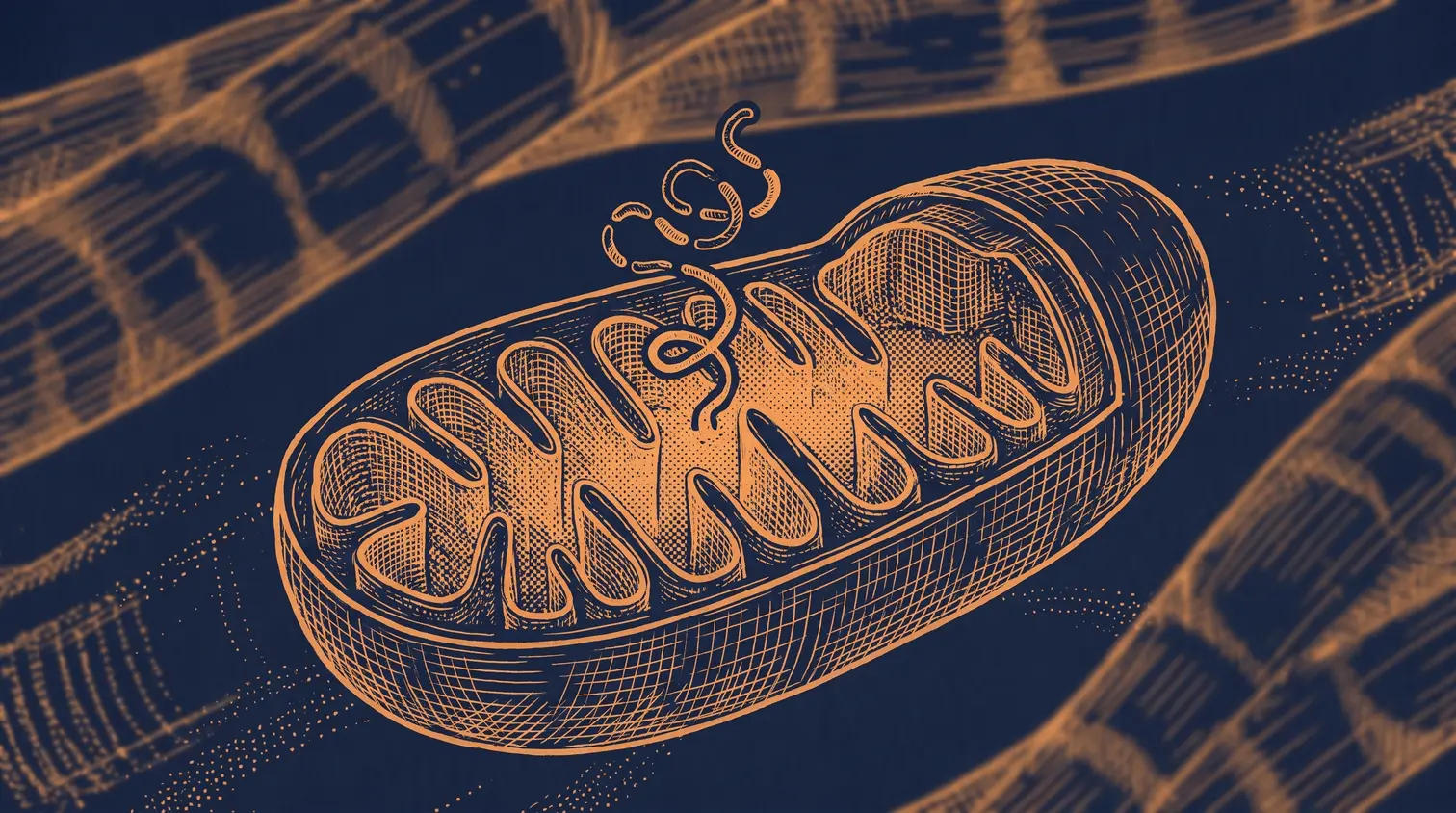
Discovery: a peptide hidden in the 12S ribosomal RNA
The human mitochondrial genome (about 16,500 base pairs) encodes 13 respiratory-chain proteins, 22 transfer RNAs and 2 ribosomal RNAs. The discovery of humanin in 2001 (Hashimoto et al., PNAS), a 24-amino-acid peptide read from the 16S rRNA gene, showed that it also holds short open reading frames (sORFs) able to produce signalling peptides.
Searching for further sORFs, Lee et al. (Cell Metabolism, 2015) found one in the 12S rRNA gene (MT-RNR1) that encodes MOTS-c. Their paper set out three findings that still shape the field: the main target organ appears to be skeletal muscle; the peptide inhibits the folate cycle and de novo purine synthesis, which activates AMPK; and giving it to mice prevents age- and diet-related insulin resistance as well as diet-induced obesity.
MOTS-c therefore belongs to the mitochondrial-derived peptides (MDPs), alongside humanin and the SHLPs (small humanin-like peptides). This family changed how the organelle is viewed: mitochondria do not just make ATP, they send signals that act on the whole organism.
Molecular identity and pharmacochemistry
Human MOTS-c has the sequence MRWQEMGYIFYPRKLR (UniProt A0A0C5B5G6), the molecular formula C101H152N28O22S2, a molecular weight of 2,174.6 Da (PubChem) and CAS number 1627580-64-6. It is a native linear peptide: no disulfide bridge, no acylation, no unnatural amino acid, unlike lipidated once-weekly analogues such as semaglutide.
- Four basic residues (Arg2, Arg13, Lys14, Arg16) give it a positive charge at physiological pH and good water solubility.
- Two methionines (Met1, Met6) and one tryptophan (Trp3) make it prone to oxidation, the first point to watch in storage.
- Lysine 14 is the residue replaced by the m.1382A>C genetic variant (K14Q), which is less active in mice.
Read with the mitochondrial genetic code, this reading frame would yield tandem start and stop codons, so it must be translated in the cytoplasm using the standard code (UniProt, based on Lee et al., 2015). How the peptide is produced and secreted remains poorly understood. It is detected in plasma and skeletal muscle.
Mechanism of action: folate cycle, AICAR and AMPK
The mechanism described by Lee et al. (2015) has three steps. MOTS-c inhibits the folate cycle and the linked methionine pathway. This reduces de novo purine synthesis and causes an intermediate of that pathway, AICAR (5-aminoimidazole-4-carboxamide ribonucleotide), to build up; AICAR is a known activator of AMPK. Activated AMPK increases glucose uptake by muscle, stimulates fatty-acid oxidation and slows anabolic pathways. In the muscle of high-fat-fed mice, treatment came with AMPK activation and higher expression of the GLUT4 transporter. Hence its reputation as a partial exercise mimetic.
Other pathways have been described since. Kumagai et al. (Am J Physiol Endocrinol Metab, 2021) showed that MOTS-c lowers myostatin, a brake on muscle mass, through the CK2, PTEN, mTORC2, AKT and FOXO1 cascade; in humans, plasma MOTS-c and myostatin were inversely correlated. Kim et al. (Physiological Reports, 2019) used metabolomics to show that MOTS-c reduces three plasma pathways in obese mice (sphingolipids, monoacylglycerols, dicarboxylates) that are raised in obesity and type 2 diabetes.
Nuclear translocation under metabolic stress
The second founding paper is by Kim, Son, Benayoun and Lee (Cell Metabolism, 2018). Under metabolic stress (glucose restriction, oxidative stress), MOTS-c moves into the nucleus, and this depends on AMPK. In the nucleus it regulates a broad set of genes, including those carrying antioxidant response elements (ARE), and interacts with the transcription factors NRF2 (NFE2L2) and ATF1.
The nucleus was known to control the mitochondrion, most of whose proteins are encoded by nuclear genes. What was not known is that a factor encoded by mitochondrial DNA could, in turn, regulate nuclear genes. For the authors, the two genomes co-evolved to regulate each other.
Insulin sensitivity and muscle metabolism
The data from Lee et al. (2015) rest on several separate mouse protocols:
- Obesity: male CD-1 mice on a high-fat diet (60% of calories from fat), 0.5 mg/kg/day intraperitoneally (IP) for 8 weeks. Weight gain and hyperinsulinaemia were limited.
- Insulin sensitivity: hyperinsulinaemic-euglycaemic clamps in high-fat-fed C57BL/6 mice treated for 7 days at 5 mg/kg/day.
- Age: in 12-month-old mice treated for 7 days at 5 mg/kg/day, insulin-stimulated glucose uptake in muscle improved. The authors also report that MOTS-c levels fall with age.
Zempo et al. (Aging, 2021) confirmed these effects in high-fat-fed male CD-1 mice (7.5 mg/kg twice daily for 21 days): lower body weight and fat mass, better glucose tolerance. Notably, female mice did not respond, an unexplained difference to build into any study design. Other models, often from a single group, describe effects in ovariectomised mice and on cold adaptation (Lu et al., 2019).
MOTS-c and exercise: Reynolds et al. (2021)
The paper by Reynolds et al. (Nature Communications, 2021) turned MOTS-c into an exercise peptide.
Human arm: 10 young sedentary men, one high-intensity cycling session, muscle biopsies and blood samples before, during and after exercise and after 4 hours of rest. Muscle MOTS-c rose 11.9-fold after exercise and was still raised at 4 hours. Circulating MOTS-c rose 1.6-fold during exercise and 1.5-fold right after, then returned to baseline within 4 hours.
Mouse arm:
- Young mice: 5 mg/kg/day IP for 2 weeks improved rotarod and treadmill performance; on a high-fat diet, only 15 mg/kg/day improved running, after 10 days.
- 12- and 22-month-old mice: 15 mg/kg/day for 2 weeks. Treated old mice ran 2 times longer and 2.16 times farther; 17% reached the final speed stage, versus none without treatment.
- Late-life intermittent treatment, started at about 23.5 months at 15 mg/kg three times a week: grip strength, stride length and a 60-second walking test improved late in life.
In vitro, MOTS-c (10 µM) protected C2C12 myoblasts deprived of glucose and serum, an effect lost when HSF1, the heat-shock transcription factor, was knocked down: the peptide also acts on muscle proteostasis under stress.
Ageing and longevity
In Reynolds et al. (2021), late-life treatment showed a trend towards longer median (+6.4%) and maximum (+7.0%) lifespan, hazard ratio 0.654. The difference was significant only up to 31.8 months (p = 0.05), not over the whole curve (p = 0.23). The robust contribution concerns healthspan (strength, walking), not maximum lifespan.
In humans, D'Souza et al. (Aging, 2020) compared men aged 18-30, 45-55 and 70-81: circulating MOTS-c falls with age, while muscle MOTS-c is about 1.5 times higher in middle-aged and older men, in line with more slow-twitch fibres. Plasma and muscle therefore change independently. To place MOTS-c among other leads, see our review peptides and longevity: epithalon, humanin and senescence.
Human data: circulating levels
No efficacy trial of native MOTS-c has been published in humans. The available data are observational, mostly measured by ELISA:
- Cataldo et al. (J Investig Med, 2018), 10 lean and 10 obese subjects: identical plasma levels (0.48 ± 0.16 vs 0.52 ± 0.15 ng/ml), correlated with insulin-sensitivity indices in lean subjects only.
- Ramanjaneya et al. (Front Endocrinol, 2019), 225 subjects: serum MOTS-c lower in type 2 diabetes, inversely correlated with age, HbA1c and blood glucose.
- Luo et al. (Diabetes Metab Syndr Obes, 2023), 225 obese children and 218 controls: lower MOTS-c in obese children, linked to poorer endothelial function.
These discrepancies partly reflect methods: ELISA kits are not standardised and sample sizes remain small.
The m.1382A>C (K14Q) variant
The mitochondrial polymorphism m.1382A>C (rs111033358), found mainly in North-East Asia, replaces lysine 14 with glutamine (K14Q). Fuku et al. (Aging Cell, 2015) saw it as a possible explanation for Japanese longevity.
Later work did not confirm this. Zempo et al. (Aging, 2021) ran a meta-analysis of three Japanese cohorts (27,527 people): men carrying the C allele have a higher prevalence of type 2 diabetes, especially among the least active. In mice, K14Q MOTS-c does not reproduce the effects of the native peptide. Among 736 Japanese centenarians, the C allele frequency (7.7%) matched that of controls (7.5%): a role in exceptional longevity is considered unlikely.
The variant also affects muscle. Kumagai et al. (BBA General Subjects, 2022) found more fast-twitch fibres in C-allele carriers; its frequency was 6.5% in sprint and power athletes, 5.1% in controls and 2.9% in endurance athletes.
Known clinical trials
CB4211 (CohBar). CohBar, a biotech co-founded by Pinchas Cohen, developed CB4211, an analogue derived from MOTS-c (not the native peptide). The phase 1a/1b trial NCT03998514 (88 enrolled) included a phase 1a in 65 healthy adults, then a phase 1b in obese adults with non-alcoholic fatty liver disease (NAFLD): 25 mg once daily subcutaneously for 4 weeks, 11 subjects on CB4211 and 9 on placebo. Results announced in August 2021: ALT -21% vs -4% on placebo, AST -28% vs -11%, glucose -6% vs 0% (significant differences), and a trend towards lower body weight. Liver fat fell as much in both groups: no drug-specific effect shown on that endpoint.
There were no serious adverse events; the only frequent effects were mild-to-moderate injection-site reactions, which had led to the trial being paused from November 2018 to May 2019. In 2023 CohBar judged the formulation unsuitable for further development, stopped the programme and then announced its liquidation. CB4211 never went beyond phase 1.
MOTS-MET (NCT07505745). This randomised, double-blind, placebo-controlled phase 2a trial, registered in 2026 by Hudson Biotech, tests MOTS-c itself in 120 adults with prediabetes and overweight or obesity: a fixed daily subcutaneous dose for 12 weeks (dose not published), with the Matsuda insulin-sensitivity index as primary endpoint. Recruitment opened in February 2026; primary completion is expected around February 2027.
Comparison with humanin and SS-31
| Criterion | MOTS-c | Humanin | SS-31 (elamipretide) |
|---|---|---|---|
| Origin | Natural, mitochondrial DNA | Natural, mitochondrial DNA | Synthetic |
| Gene | 12S rRNA (MT-RNR1) | 16S rRNA (MT-RNR2) | None |
| Size | 16 amino acids | 24 amino acids | 4 amino acids |
| Mode of action | Hormonal signal: folates, AICAR, AMPK; nuclear translocation | Cytoprotection: surface receptors and binding to Bax | Binds cardiolipin in the inner membrane |
| Main target | Muscle, glucose metabolism | Neurons, cell survival | Respiratory chain |
| Status | Research; phase 2a ongoing | Preclinical research | FDA-approved on 19/09/2025 (Forzinity, Barth syndrome) |
Humanin was identified in a screen for factors protecting neurons against Alzheimer's-related insults. Like MOTS-c, it is lower in type 2 diabetes and the two peptides correlate (Ramanjaneya et al., 2019), but it acts mainly as a cell-survival factor.
SS-31 (elamipretide) is a synthetic tetrapeptide that enters the mitochondrion and binds cardiolipin to stabilise the respiratory chain. It is the only one of the three approved as a medicine (FDA accelerated approval). Details in our guide SS-31 (elamipretide), the peptide that targets the mitochondrion directly. In short: MOTS-c signals, humanin protects, SS-31 repairs.
Pharmacokinetics
No human pharmacokinetic data on native MOTS-c have been published. Being neither acylated nor protected against proteases, it is given daily (sometimes twice daily) or at least three times a week in every published mouse protocol, and the MOTS-MET trial uses a daily injection. Circulating MOTS-c returning to baseline 4 hours after exercise (Reynolds et al., 2021) is consistent with a short half-life, though no figure has been established.
Doses studied in the literature
| Study | Model | Dose and duration | Main result |
|---|---|---|---|
| Lee et al., 2015 | CD-1 mice, high-fat diet | 0.5 mg/kg/day IP, 8 weeks | Limited weight gain and hyperinsulinaemia |
| Lee et al., 2015 | High-fat-fed mice; 12-month-old mice | 5 mg/kg/day IP, 7 days | Improved muscle insulin sensitivity |
| Reynolds et al., 2021 | Young mice | 5 mg/kg/day IP, 2 weeks | Improved physical performance |
| Reynolds et al., 2021 | 12- and 22-month-old mice | 15 mg/kg/day IP, 2 weeks | Endurance doubled in old mice |
| Reynolds et al., 2021 | Mice from 23.5 months | 15 mg/kg 3 times a week | Better strength, stride and walking |
| Zempo et al., 2021 | Male CD-1 mice, high-fat diet | 7.5 mg/kg twice daily IP, 21 days | Lower weight and fat mass |
| CB4211, phase 1b | Obese adults with NAFLD | 25 mg/day SC, 4 weeks (analogue) | Lower ALT, AST and glucose |
To translate an animal dose, the reference is body-surface-area conversion from the 2005 FDA guidance: the mouse dose in mg/kg is divided by 12.3. As a calculation only, 5 mg/kg in mice corresponds to about 0.41 mg/kg human equivalent, and 15 mg/kg to about 1.2 mg/kg. This ignores the peptide's own pharmacokinetics, which are unknown in humans.
Reconstitution protocol (research use only)
Lyophilised MOTS-c is reconstituted in bacteriostatic water (0.9% benzyl alcohol), which limits bacterial growth between draws. Being very basic, the peptide dissolves easily. On a U-100 syringe, 1 ml = 100 units, so 1 unit = 0.01 ml.
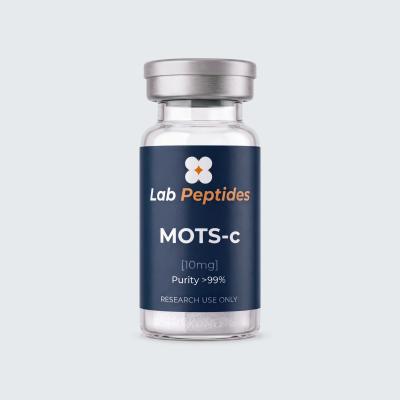
10 mg vial (MOTS-c 10 mg): with 2 ml of water, 5 mg/ml, so 1 unit = 50 µg, 10 units = 0.5 mg, 20 units = 1 mg; with 1 ml, 10 mg/ml, so 10 units = 1 mg.
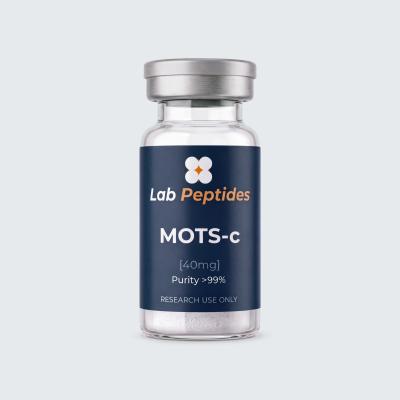
40 mg vial (MOTS-c 40 mg): with 4 ml, 10 mg/ml, so 1 unit = 100 µg, 10 units = 1 mg, 50 units = 5 mg; with 2 ml, 20 mg/ml, so 25 units = 5 mg.
General rule: concentration (mg/ml) = peptide (mg) ÷ water (ml), then volume to draw (ml) = amount required (mg) ÷ concentration. Let the vial reach room temperature, disinfect the stopper, run the water slowly down the vial wall, swirl gently without shaking and wait for a clear solution.
Stability and storage
Lyophilised MOTS-c keeps at -20 °C away from light and moisture. Once reconstituted, it is kept at 2-8 °C; common practice for peptides in bacteriostatic water is to use them within about four weeks, with aseptic handling. No solution-stability study specific to MOTS-c has been published. Its oxidisable residues (Met1, Trp3, Met6) mean air, light and freeze-thaw cycles of the solution should be avoided. General principles: how to store lyophilised peptides.
Safety and reported signals
Human tolerability data are limited to the CB4211 analogue: no serious adverse events over 4 weeks, but frequent injection-site reactions. Nothing has been published for native MOTS-c in humans; the MOTS-MET trial, which tracks adverse events, ECG and immunogenicity over 16 weeks, will be the first serious source. Open questions: the lack of response in female mice, long-term immunogenicity and the effect of chronic AMPK activation outside muscle.
Regulatory status
MOTS-c is not approved as a medicine by any agency (FDA, EMA); in Europe it falls under research use (RUO). The World Anti-Doping Agency added it to its 2025 Prohibited List, class S4 (hormone and metabolic modulators), as an AMPK activator: it is banned at all times, in and out of competition.
Frequently asked questions about MOTS-c
Is MOTS-c a natural peptide?
Yes. The body produces it from mitochondrial DNA and it circulates in the blood at concentrations around the ng/ml range. The research peptide is its synthetic copy.
What is the difference between MOTS-c and SS-31?
MOTS-c is a natural hormone acting on metabolism through AMPK and the nucleus. SS-31 is a synthetic tetrapeptide that binds cardiolipin in the inner mitochondrial membrane.
Are there results in humans?
Not yet for native peptide treatment. Human data cover endogenous levels (rise with exercise, fall with age and in type 2 diabetes) and the CB4211 analogue. The MOTS-MET phase 2a trial is ongoing.
Which doses have been studied?
In mice, 0.5 to 15 mg/kg per day intraperitoneally over 7 days to 8 weeks, or 15 mg/kg three times a week long term. In humans, only the CB4211 analogue has been tested, at 25 mg per day for 4 weeks.
How do you reconstitute a 10 mg vial?
With 2 ml of bacteriostatic water you get 5 mg/ml: on a U-100 syringe, 10 units = 0.5 mg and 20 units = 1 mg.
Conclusion
MOTS-c showed that the mitochondrion does not simply obey the nucleus: it talks back. In ten years this peptide has gone from a reading frame hidden in the 12S rRNA to a recognised regulator of muscle metabolism, exercise adaptation and age-related physical decline, with a human genetic basis (K14Q) that supports its role in insulin sensitivity. Clinical data on the native peptide are still missing; MOTS-MET should deliver the first in 2027.
Order your MOTS-c: 10 mg and 40 mg vials, stocked in France, fast shipping. Research use only.